
Shopping Cart

Practical guide · Period underwear
How built-in absorbent protection works
Reusable period underwear looks much like regular underwear, but has a built-in absorbent gusset designed to take in and retain menstrual flow. Its different layers help manage moisture and reduce the risk of liquid passing through the garment. You wear it, wash it and use it again.
Not every pair offers the same protection. Absorbency, the size of the protective area and the fit all vary between styles. Understanding those differences helps you choose the right pair for your cycle.
01 · RECEIVE
The inner gusset comes into contact with menstrual flow.
02 · ABSORB
The middle layers help hold the liquid.
03 · PROTECT
An outer layer helps reduce leaks.

What do the layers in period underwear actually do?
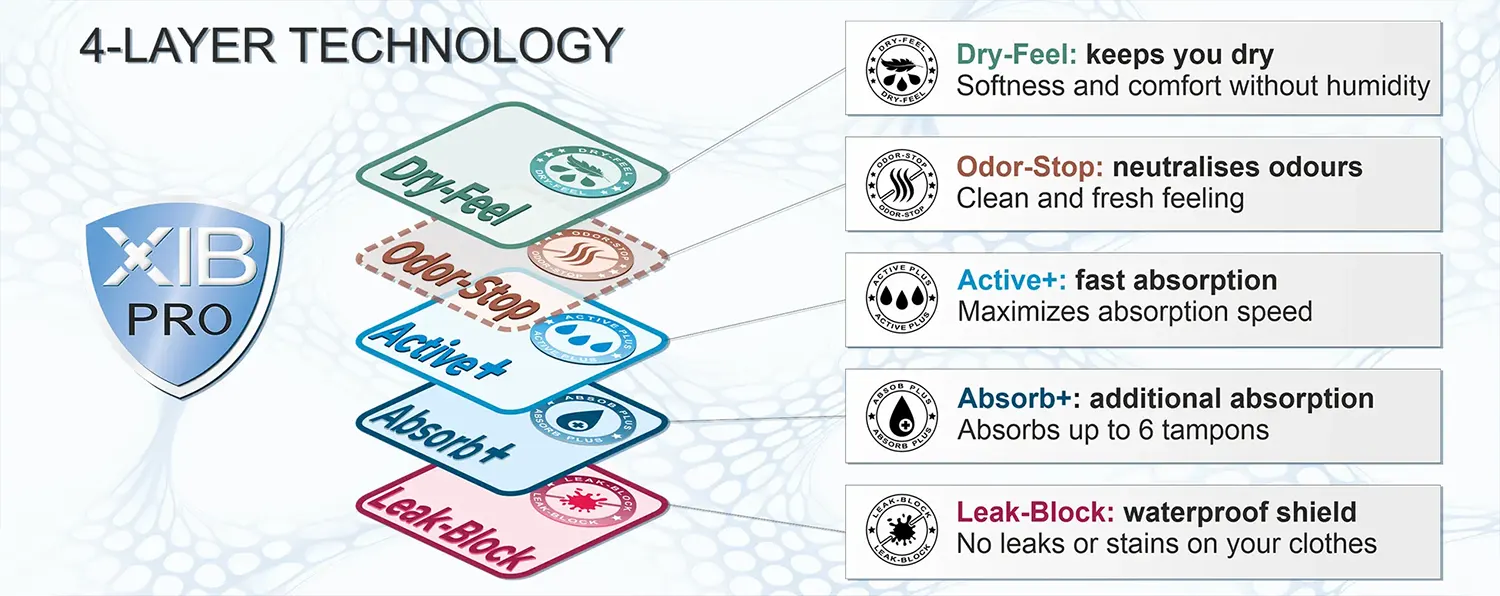
The key is the absorbent gusset. In Libertad Menstrual styles featuring XIBPro technology, this area contains four layers with complementary functions. The exact materials and performance should always be checked on the individual product page.
1. Dry-Feel · Contact
The layer closest to your body allows fluid to move inwards and is designed to feel comfortable against the skin.
2. Active+ · Distribution
This layer helps draw in and distribute liquid towards the absorbent core, making use of the protective area.
3. Absorb+ · Retention
The core helps hold menstrual fluid. Its capacity is finite and differs across light-, medium- and high-absorbency styles.
4. Leak-Block · Barrier
The outer protective layer helps stop liquid passing through to clothing. Effective protection also depends on available absorbency and a proper fit.
How much menstrual flow can period underwear absorb?
It depends on the pair. Our collection includes several absorbency levels, but there is no single capacity that applies to all period underwear. Use the absorbency information and icons on each product page to compare intended uses.
Light flow
Often suitable for spotting, the final days of a period or backup protection, depending on the style.
Medium flow
Designed for moderate bleeding, with changes based on your personal flow and the garment's capacity.
Heavy flow
Look for high-absorbency styles with suitable coverage; you may need more frequent changes or backup protection.
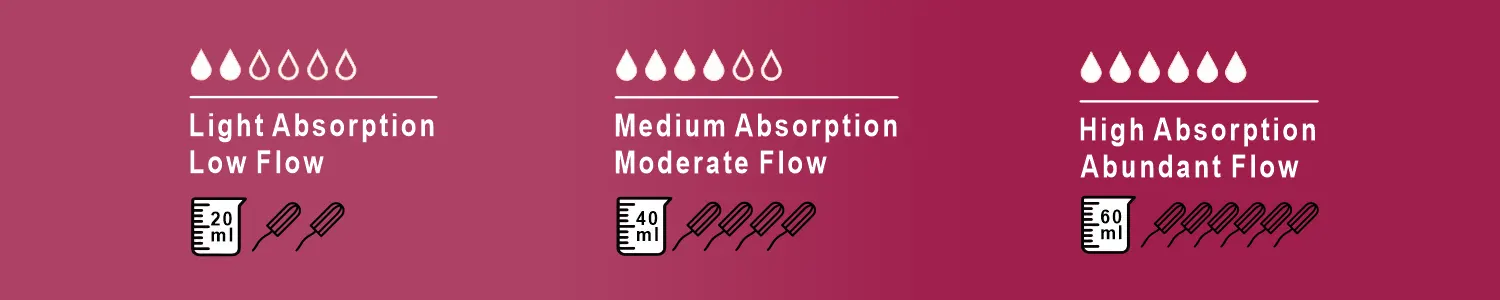
Absorbency and coverage aren't the same thing. One pair may hold more fluid while another has a longer absorbent panel at the front or back. For sleeping, sport or long periods of movement, check both — as well as the fit.
How to use period underwear for the first time
- Wash before first wear. Follow the care label so your new pair is clean and ready to use.
- Put it on like regular underwear. Make sure it sits comfortably around the leg openings and the absorbent gusset is correctly positioned.
- Choose absorbency for that day. Depending on your flow and the product, you can wear it alone or as backup to a menstrual cup or another period product.
- Change when needed. If the underwear starts to feel damp, heavy, uncomfortable or close to full, put on a clean pair.
There's no fixed number of hours that works for everyone. Wear time depends on your flow, the style you choose and the day of your cycle. For overnight wear, check the absorbency rating and the extent of back coverage.

How is period underwear different from other period products?
Period underwear has an integrated absorbent area. A reusable pad, by comparison, is a separate absorbent item worn with ordinary underwear. Both are washable and reusable, but fit, coverage and capacity vary.

Other reusable formats and when to choose them
- Period thongs: often intended for light flow or occasional backup protection; check the individual item.
- Reusable pads and pantyliners: separate absorbent items that can be changed without changing your underwear.
- Period bikinis and swimwear: made specifically for use in water. Regular period underwear isn't a substitute for period swimwear; always check the recommended flow level for each swim style.
What changes compared with disposable products?
The main difference is reusability after washing. Replacing some single-use period products with washable alternatives can reduce the disposable waste you generate over time. That doesn't mean a garment lasts forever or that every fabric and washing routine has the same environmental impact.

How to wash and reuse period underwear
After wearing, rinse in cold water, wash with a gentle detergent according to the care label (our general recommendation is 30°C maximum) and air dry. Avoid fabric softener, bleach and tumble drying. For the full routine, read our guide to washing reusable period underwear.
Frequently asked questions about how period underwear works
Absorbency and protection
Does period underwear have a pad built in?
It doesn't contain a disposable pad. Instead, absorbent layers are built into the gusset to help manage and hold menstrual flow.
Can I wear period underwear without a pad or tampon?
Yes, if the style's absorbency matches your flow. At other times it can serve as backup to a menstrual cup or another period product.
How do I know when to change my period underwear?
Change when it feels damp, heavy, uncomfortable or close to its absorbent capacity. There is no universal wear time measured in hours.
Choosing and caring for a pair
Can I use period underwear for heavy flow or overnight?
Some styles offer high absorbency or wider overnight coverage. Check both the capacity and the front and back protection. You may need extra changes or another period product as backup.
Can I swim in regular period underwear?
Choose a period bikini or swimsuit specifically designed for the water. Ordinary period underwear shouldn't be assumed to work the same way in a pool or the sea.
How many times can period underwear be reused?
It depends on the materials, how often you wear it and how you care for it. Watch for changes in fabric, seams and absorbent performance rather than relying on one fixed lifespan.
The right choice starts with understanding your flow
Period underwear combines absorbent layers and a protective barrier in one washable garment. How well a pair works for you depends on choosing the right absorbency, coverage and size for each part of your cycle.